
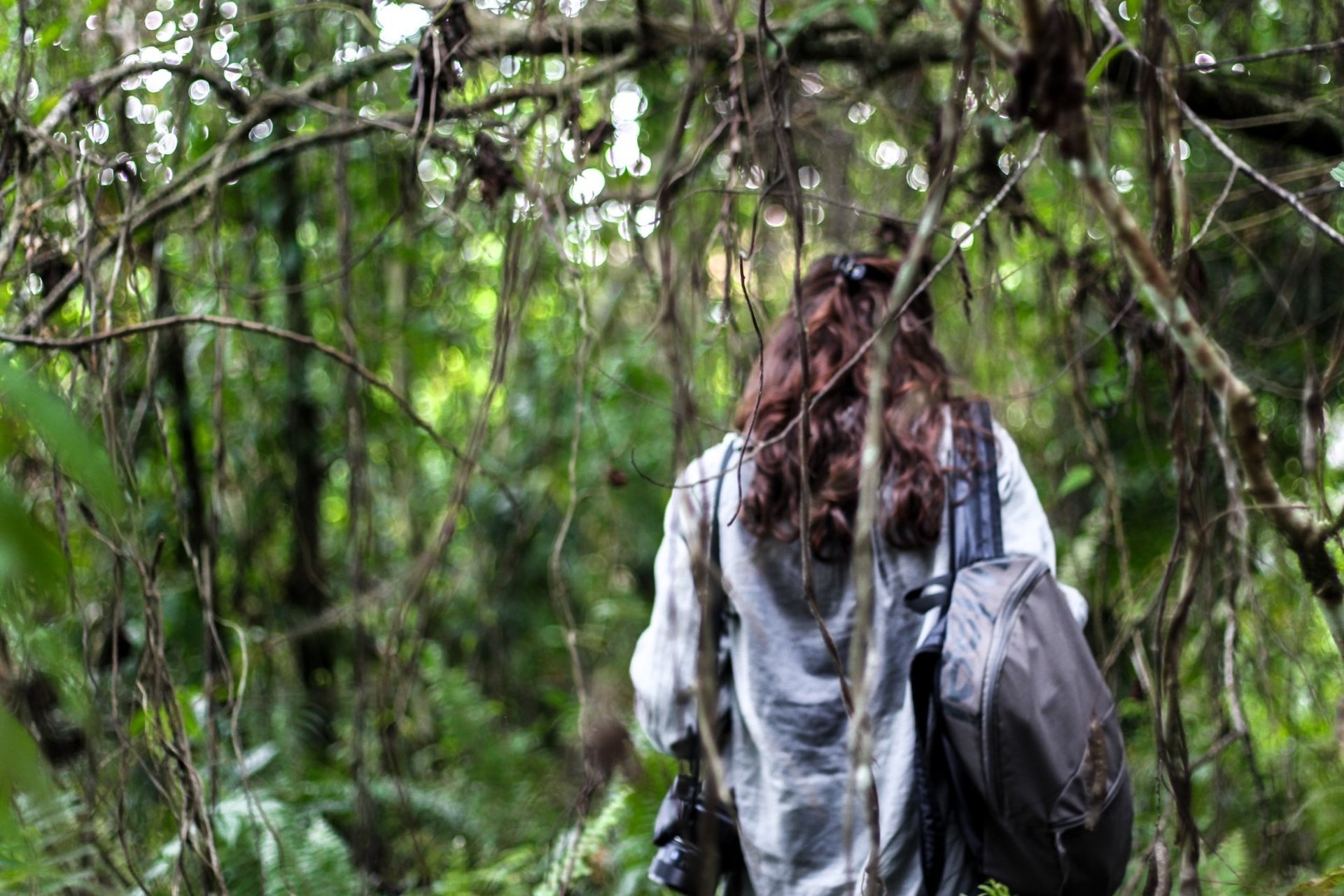
Are you looking for adventure?
We accept applications for the opening of the field station on the 01.06.2027
Gain crucial field experience
High-quality opportunities for hand-on work in field science and conservation are scarce. With us, you can gain crucial field experience at our rainforest field station, where hands-on learning meets real conservation impact. Participants work directly with our researchers and rangers, learning essential skills such as biodiversity monitoring, camera trapping, habitat assessment, GIS mapping, field sampling, and data collection in one of the world’s most diverse ecosystems. Beyond technical training, you will gain a deep understanding of community-based conservation and the challenges and rewards of protecting primary rainforest. This is an opportunity to build expertise, expand your skillset, contribute to meaningful science, and immerse yourself in true rainforest ecology.


Progress professionally
While many volunteer-based field station and eco-projects simply provide a pleasurable short-term experience, our team of scientist is motivated to do real research with the students. If it is in the visitor's interest, we are happy to develop your research project further and look for a way to submit it to an appropriate journal. This way, you will not only get real insights into the scientific process and a memory that manifests itself in the scientific world, you get real-world benefits for your professional career and personal development. A scientific publication as a result of your research project will add true impact and value to your CV and may unlock novel career trajectories.
Note: We can only offer this service for research project that last longer than two months.


The Kolibry Field Station
Along the Andean foothils, south of Rio Napo and in the world-famous Amazon basin, our station provides a research hub to perform your research in one of the world's richest biodiversity hotspots. Our forest connect up to Yasuní National Park and to Manaus via unfragmented forest cover.


Visit one of the earth's richest biomes
Optimized for science
While our station sits deep in the forest, away from large cities or communities, we did not want to compromise on the research experience. We provide comfortable dorms and rooms with good climate, a simple laboratory, internet, electricity, running drinking water, and food provided by our staff.
Strategically positioned
Due to an agreement contract with the Selva Viva foundation, we gained access to this excellent field station that sits right at the border of the joint ~1600 ha Kolibry-Selva Viva conservation corridor, providing direct access and a straightforward research process. Meanwhile, you can reach our reserve in under five hours from Quito airport.
Operated by our trusted partners
Our partner company Kolibry Expedition S.A.S. purely exists to make the field station run smoothly and your research experience as pleasant as possible. Kolibry Expedition S.A.S. donates 20% of their revenue to Kolibry to ensure the conservation can continue for generations.
Scientific Projects
Here we present an overview of vacant research projects on our station. Apply and gather crucial experience and explore a unique adventure
Study Species Interactions
Observe how species in the jungle interact with each other. These studies include organismic networks for pollinators or parasites to understanding which fruit trees secure the lifelihood of critters. We will model these interactions in computational models to understand and potentially predict their patterns.


Biological Species Inventories
We still only know a fraction of the fauna and flora on our extensive area of protected forest. Join us in the field station and explore taxonomic groups of your interest with us. You will be amazed at the endless biodiversity you can encounter here, and might as well find undescribed species. As we are just starting, almost all groups are open for this type of research.
Learn cutting-edge technology and develop your own models to aid in scientific discoveries. From species or even specimen-based detection and identification using camera traps to data analysis of large datasets, Machine Learning can be implemented in biological research many useful ways.
The Application of AI in Science


How to apply
To ensure high scientific quality on our station and a pleasurable experience for our guests, we have introduced an application process. Please state your interests and requirements in the application form. We will check your project for feasibility on our station or conceptualize a new project together. We warmly invite you to submit projects and are excited about our scientific journey together!
Requirements
Qualifications
We strongly believe in open scientific practices and citizen science. While a scientific background will enable us to explore advanced scientific questions, we will also guide you into the topic of science and like to host all kinds of naturalists. Together, we can find a project that suit your expectations and skillset.
Fees
To inquire about our fees, please use the application form. We will provide a transparent quote tailored to your project, duration, and requirements
Founding rate (2027):
US$40/day
US$250/week
US$950/month
This includes accomodation, simple meals, access to approximately 1600 hectares of rainforest, research facilities, and internet.
Discounts may be available for long term projects, Ecuadorian students, and institutional collaborations.
Upcoming courses & expeditions
Find our schedule about upcoming events hosted by Kolibry. Make sure to secure a spot in these exciting adventures.
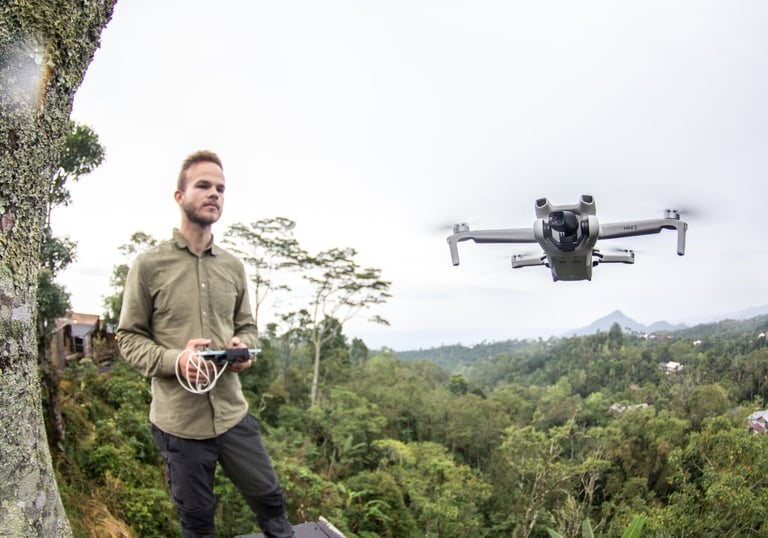
Drone Photogrammetry Course
Learn vital skills for a career in conservation, directly in the rainforest. Photogrammetry has many applications from measuring land-use to vegetation cover.
Canopy Biology Course
Together with experienced tree climber, Juan Lucas, we will explore canopies in our reserve and learn crucial skills to study arboreal wildlife. This involves the tree climbing course including setting camera traps, taking samples, and learn best practices.
Master macro photography and practice in a rich, biodiverse environment. Tim L. Heller will teach you everything from focus stacking to proper flash settings.
Macro Photography Course


Getting to the Kolibry Station
Among other factors, we prioritized accessibility for our station. There are several ways to reach us directly from Quito.
Transfer (Taxi): Costs about 30$ and transfers you directly from Quito (including the airport) to Tena.
Leaves at 5:00 AM, 12:00 PM, and 5:00 PM
Bus: From Quitumbe Terminal, choose a Bus directly to Tena for about 10$. We recommend to ensure it is the faster Baeza-Route and not the Ambatos-Route.
From Tena, it is about an hour drive to reach our station. Fortunately, we have frequent access through Bus from all three Tena bus terminals to El Carmen for about 3$. Bus depart at the following hours.
Alternatively, you can take a taxi for about 15$.
Education
© 2026. All rights reserved.
Research
Conservation
Newsletter